


 UK
UK
 IE
IE


Almost Jackpots: Why the “Near Miss” is the Brain’s Biggest Trap
 Simon Young
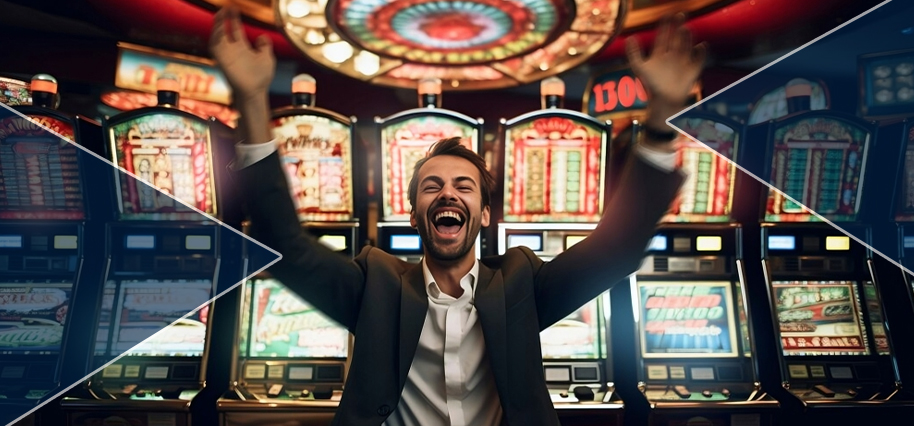
Near-miss effect gambling can lead to irrational and irresponsible gambling, so understanding slot machine psychology is vital.
The concept of ‘almost jackpots’ is an interesting one, and it results in players thinking that they’re so close to a big prize, when in reality, they’ve just lost a slot spin like every other.
Your brain tells you that it’s a near miss and releases dopamine to energise your excitement, but the math tells you that it’s a statistical loss, determined by the random number generator technology behind every spin of the reels.
To help you avoid irresponsible gambling and to stop constructing irrational patterns in your mind, we dive deep into the ‘almost jackpots’ phenomenon and explain how to break the spell to ensure you bet within your means and avoid chasing losses.
The Science: The Reward Prediction Error
Slot machine psychology is fascinating, particularly the phenomenon of the ‘almost jackpot’. It’s also known as near-miss effect gambling, and occurs when you seemingly very nearly land a jackpot prize while playing slots (or many other casino games, or bingo, for that matter).
It’s embedded within a neurological mechanism called Reward Prediction Error (RPE). This is the difference between what your brain expects to happen and what actually happens in real-time.
If the outcome is better than expected, dopamine levels spike, but if the outcome doesn’t match the expectation, dopamine drops. This is why it’s sometimes referred to as the Dopamine Reward Prediction Error scenario.
But the brain doesn’t just release dopamine after an outcome; it releases it in anticipation of one. So, as the slot reels spin and symbols fall into place, your brain starts predicting that a win will occur, causing a dopamine spike and heightened excitement.
When the spin outcome confirms that you’re one symbol short of the jackpot prize, the dopamine doesn’t magically vanish. Instead, your brain experiences a prediction error, telling you that, although you didn’t win, you were super close.
As a result, your brain doesn’t register this as a failure, but as progress or skill improvement, even though there’s zero skill involved in slot gameplay.
Compare it to throwing darts. If you miss the triple 20 by a millimetre, it doesn’t necessarily feel like you’ve lost, as you might regard it as progress and an improvement on previous throws. Your brain tells you to refine your approach and try again following the near-miss, and you’re likely to improve in the near future.
Near-miss outcomes in gambling trigger precisely the same feedback loop, even though there’s zero skill involved. So, because you missed the jackpot by a single symbol, your brain tells you to refine and spin again, and the jackpot will surely follow.
This is why losing the jackpot by one symbol can feel invigorating and like you’ve actually achieved something, when, in reality, the loss is just like any other slot machine spin that doesn’t result in a payout.
The Digital Reality (RNG)
From a scientific standpoint, the ‘almost jackpot’ phenomenon makes sense. However, when you fully comprehend how slot machines work, you’ll appreciate that it’s a fallacy.
Every online slot machine game is powered by random number generator (RNG) technology. RNGs are complex mathematical algorithms that determine the outcome of every spin of the reels immediately after the bet is placed and the spin button is pressed.
Each RNG runs continuously, generating thousands of numbers per second, so there’s absolutely no way of knowing which combination of symbols will appear on the next spin of the reels.
The visual animation that follows the confirmation of the bet has no impact on the outcome; it’s merely a visual representation of the RNG. So, whether one, two, or zero jackpot symbols land on a payline, the result is the same – you don’t win the jackpot.
Tying it back to our analogy from above, a slot machine is not a dartboard. When you approach the oche, you’re in complete control of where the darts will end up, and your skill determines your score every time you throw your arrows.
Landing two triple 20s and missing the third by a millimetre is undoubtedly a near miss and still a great score, resulting in a dopamine hit and confidence that you might score 180 the next time around.
In stark contrast, you have zero influence on the slot machine grid. When you bet and spin, the RNG determines the outcome, which may or may not result in a payout. If the RNG shows two jackpot symbols on a line and a third one that excruciatingly misses by one space, you’re no closer to a win than any other losing combination served up by the technology.
The probability of hitting the jackpot on the next spin is the same whether you just missed by a single symbol or lost across the reels. RNGs ensure statistical independence on every spin, and previous spins cannot influence the future, regardless of what your brain might be telling you.
Fundamentally, on JeffBet’s slots, a near-miss is mathematically identical to a total loss. Don’t let the animation fool you – every reel spin is based entirely on chance.
How to Break the Spell
Understanding slot machine psychology is half the battle. Acknowledge that your brain might release dopamine when you appear close to a jackpot, but don’t act on it.
Rather than regarding the slot machine as “hot” after seemingly missing out on a jackpot prize, look at it for what it provides: an entirely random chance of winning a payout on every spin.
So, if you spin a jackpot slot at JeffBet and two of three scatter symbols land, don’t assume that the next spin will result in a huge win.
Instead, retain your focus and manage your bankroll accordingly. Continue adjusting your stake and betting within your means, and ensure you stick to your limits.
One thing you can control, however, is the volatility of the slots that you play. If you’re seeking sizeable wins and are happy to be patient, high-volatility slots are a good option.
Conversely, if you prefer seeing regular, albeit smaller wins, low-volatility slots might be better, while medium-volatility slots fall somewhere in between.
Test your discipline and patience on a high-volatility slot at JeffBet like Outlaws Inc by Hacksaw Gaming.
But don’t forget, even if you’re seemingly close to triggering the bonus round or landing the max prize on a reel spin, your next spin will be entirely random, so don’t fall for the near-miss effect gambling fallacy.
Please gamble responsibly. Visit our Bet Smart Hub to learn about tools, tips, and resources that will help you bet within your means while playing slots at JeffBet.